



Two ways to start
You can browse fully finished ring settings and pair one with a diamond, or start from a diamond you love and build a ring around it. Both paths end at the same place — a ring in the setting, metal, and stone you chose. The only difference is where you begin.
Choosing a setting style
Setting style is the most personal decision in the process, and it shapes everything else:
- Solitaire — a single diamond, minimal metal. Timeless, and the style that puts the diamond front and centre.
- Halo — a ring of smaller diamonds surrounding the centre stone. Makes the centre diamond look larger and adds sparkle.
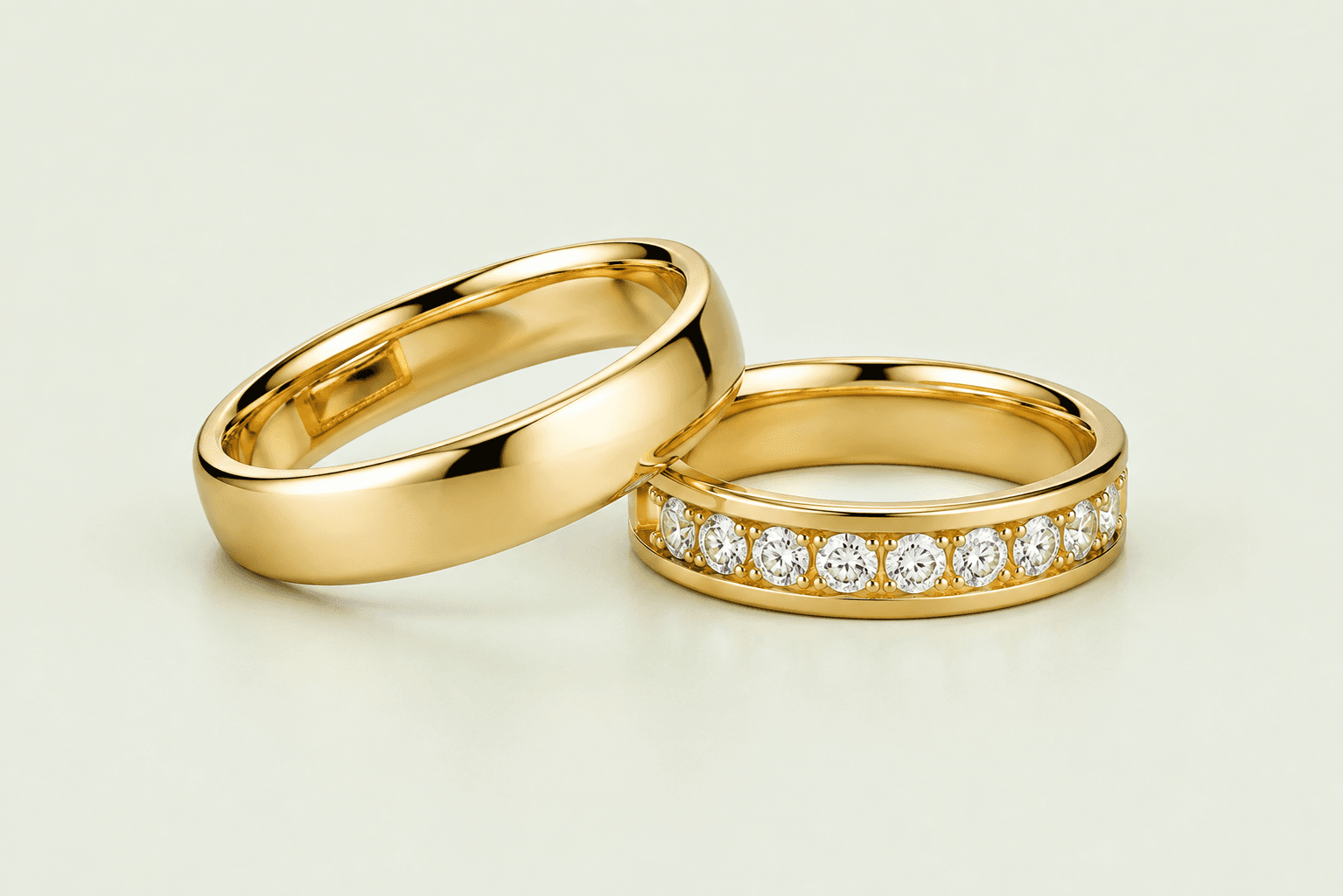
- Pavé — small diamonds set along the band, adding continuous sparkle without competing with the centre stone.
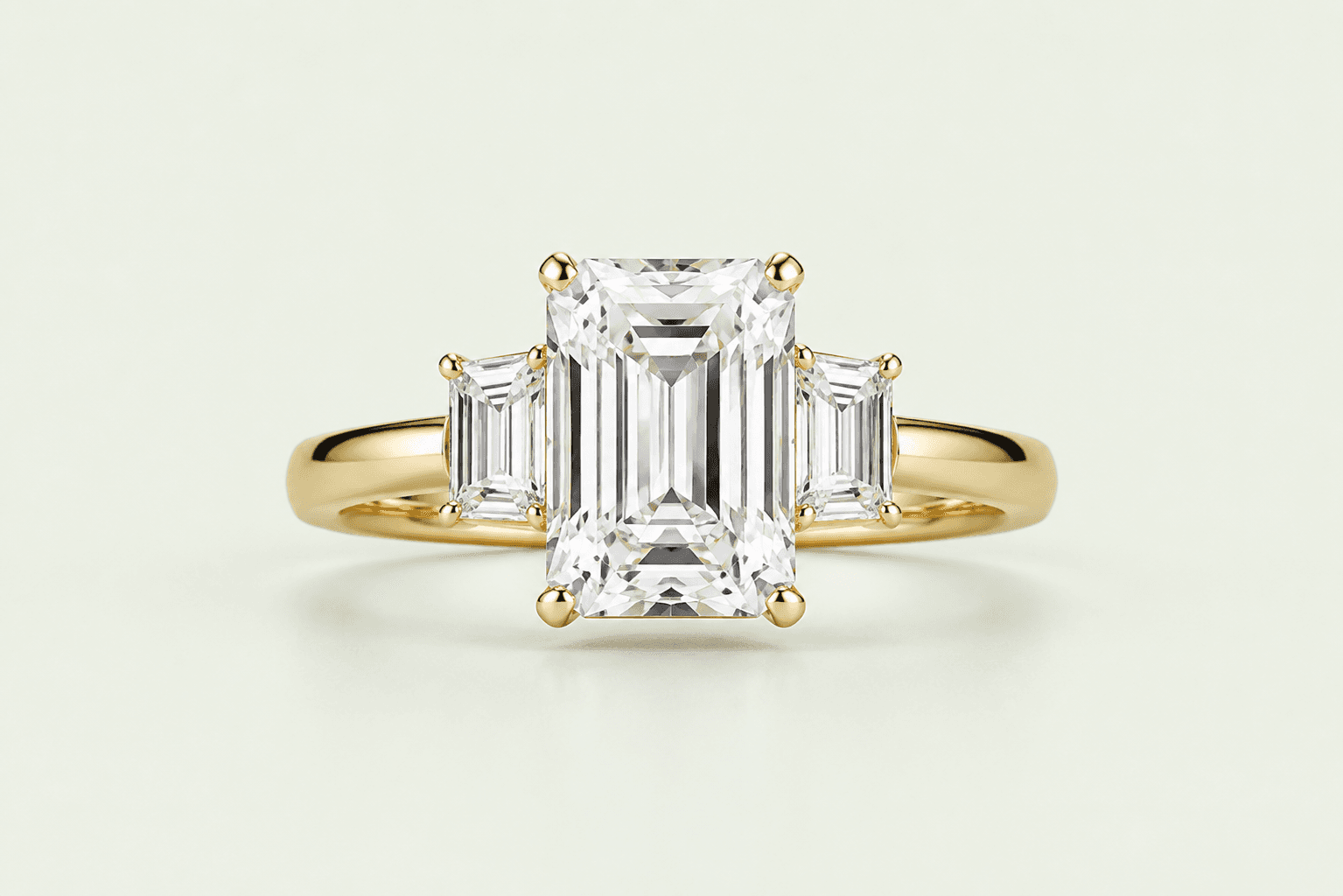
- Three stone — a centre diamond flanked by two smaller stones.
- Vintage — intricate metalwork and detailing inspired by earlier eras.
- Bezel — the diamond is fully wrapped in a metal rim, the most protective setting and popular for active lifestyles.
- Cathedral — the band arches up to the centre stone for a raised, elegant profile.
Browse settings before you commit to a diamond shape — some styles suit round and oval stones better than fancy shapes like emerald or marquise.
Choosing a metal
See our full Metal Guide for detail, but as a quick rule: platinum and white gold suit cooler skin tones and higher-colour diamonds, while yellow and rose gold suit warmer tones and can flatter a touch of warmth in lower-colour stones.
Matching the diamond to the setting
A few pairings worth keeping in mind:
- Prong count and style should suit the diamond shape — round and princess cuts need different prong configurations than pear or marquise.
- Higher-colour diamonds (D–F) show best in platinum or white gold, where nothing competes with their whiteness.
- A halo setting can let you size down the centre diamond while keeping a similar visual size — a useful budget lever.
Getting the size right
Ring size is the one measurement that's hardest to change once a stone is set. See our Ring Sizing Guide for how to measure at home. For a surprise proposal, borrowing a ring they already wear and tracing the inside is the most reliable method — and we offer free resizing within 6 months if an adjustment is needed afterward.
Building your ring, step by step
Our ring builder walks you through three steps:
- Setting — choose your style, metal, and band details
- Diamond — browse live inventory, filtered to complement your chosen setting
- Review — confirm your combination and see the full price breakdown before checkout
You can start from either end — setting first or diamond first — the builder keeps everything in sync either way.
If you're working to a deadline
If you have a proposal date or event in mind, order with as much buffer as you can and reach out to us directly — we're glad to advise on realistic turnaround for your specific setting and metal combination before you order.